Category: Best Picks & Comparisons

  • American made vs imported artificial grass discounts 2022

    American made vs imported artificial grass discounts 2022

    Sticker price grabs attention, but ownership cost tells the real story.

    Many buyers compare only the price per square foot, yet backing strength, fiber technology, drainage performance, UV stabilization, and replacement support often matter far more after installation. A cheaper imported roll can perform exceptionally well in some climates, while another imported product with lower-quality yarn may flatten within a few seasons. Likewise, not every American-made turf automatically represents premium quality.

    And one detail that professionals often examine first is face weight combined with yarn construction rather than marketing names. Two products with similar appearance may behave very differently after thousands of footsteps because their fibers recover differently once compressed.

    Climate also deserves more attention than many homeowners expect—especially if temperatures regularly exceed 100°F (38°C) or winters bring repeated freeze-thaw cycles. The backing adhesive (which many buyers never ask about) can influence how well seams remain intact over time.

    But warranty service deserves equal consideration. A lengthy warranty sounds reassuring until you discover replacement material must come from overseas production batches that may no longer match the installed lawn. Domestic manufacturers sometimes provide faster claim handling simply because inventory and customer service are closer to home, although that varies by company.

    Here’s the thing: the best discount is the one attached to a product that still performs well ten years later, not necessarily the biggest percentage printed on a seasonal promotion.

    The options, covered honestly

    American-made artificial grass appeals to buyers who value predictable manufacturing standards, quicker distribution, and local warranty support. Production often follows tighter quality-control procedures, and replacement material may be easier to source if repairs become necessary years later (assuming the product line remains available). Many commercial installations, schools, and sports facilities appreciate these practical advantages more than the initial savings.

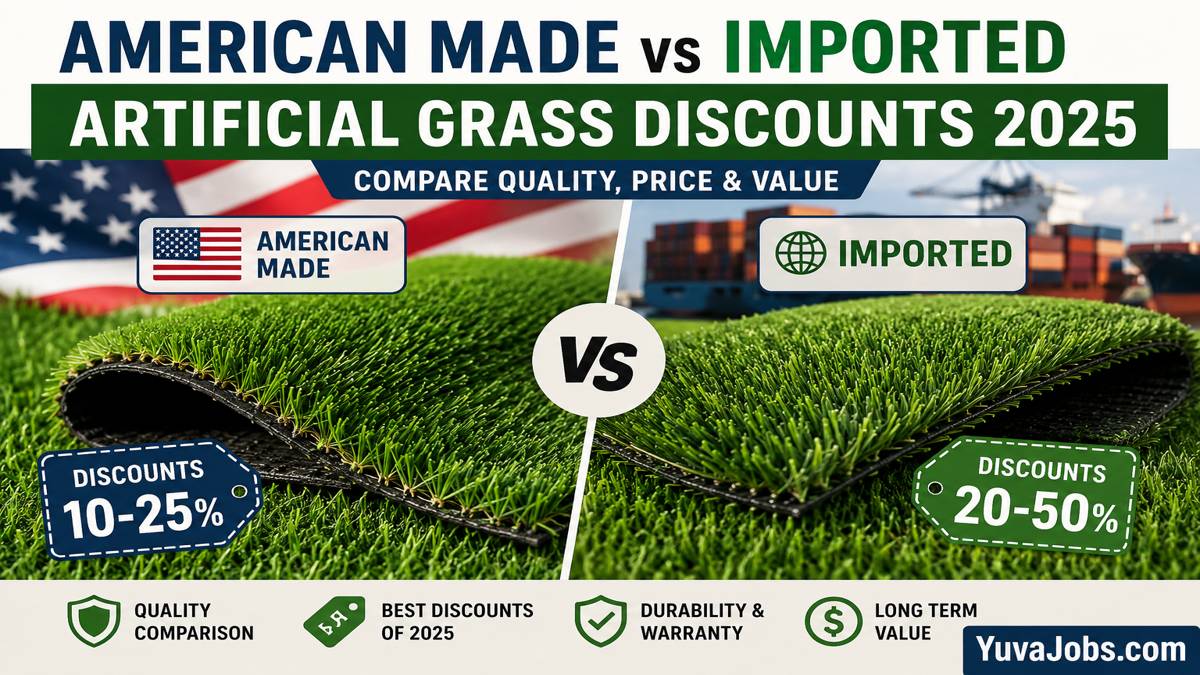
    The downside is obvious. Manufacturing costs in the United States are generally higher, which often translates into higher retail pricing even during promotional periods. Discounts of 10% to 25% are fairly common during seasonal sales, but dramatic price cuts are less frequent because production costs leave less room for aggressive markdowns.

    Imported artificial grass covers an enormous range of quality levels rather than one single category. Premium imports from well-established manufacturers can rival domestic products in appearance, drainage, softness, and durability. Some manufacturers overseas produce turf for globally recognized brands using advanced extrusion equipment and strict testing standards.

    Or you may encounter budget imports designed almost entirely around low purchase price. Those products sometimes use thinner yarns, lighter backing, or reduced UV protection, making them attractive initially but less convincing after several years outdoors.

    And shipping conditions also affect value. Imported inventory may experience longer lead times or temporary shortages depending on freight costs, port congestion, or changing tariffs. Those factors occasionally produce unusually deep discounts as distributors clear warehouse inventory, though those opportunities are unpredictable.

    For many homeowners, premium imported turf represents the middle ground between affordability and long-term performance. The savings can be meaningful without sacrificing noticeable quality if the manufacturer has an established reputation and transparent testing data.

    Realistically, installation quality often has a greater effect on satisfaction than manufacturing origin alone. Poor base preparation, weak seam construction, or inadequate drainage can shorten the life of even an excellent product.

    One honest limitation deserves mentioning here. Discount availability changes throughout the year because freight rates, raw material costs, regional demand, and retailer inventory all fluctuate. Any percentage savings discussed in 2025 should be treated as a snapshot rather than a guarantee for every market.

    Side-by-side comparison

    Who should pick what

    Homeowners planning to stay in the same house for many years usually benefit from premium American-made products because warranty support, replacement availability, and long-term durability may offset the higher purchase price.

    But if your priority is balancing cost with performance, premium imported turf from an established manufacturer often delivers excellent value. Focus on technical specifications rather than country of origin alone, and ask for independent testing information before making a decision.

    Rental property owners or those renovating a home before selling may find mid-range imported options more sensible. The initial investment stays lower while appearance remains attractive for several years.

    So pet owners should pay special attention to drainage rates and antimicrobial backing instead of concentrating exclusively on discounts. Families with active children may appreciate thicker yarn recovery and stronger backing because heavy daily use reveals construction quality much faster than occasional foot traffic.

    Anyone receiving an unusually large discount should also verify whether the product is discontinued, overstock, or nearing the end of its warranty availability.

    Choosing between American-made and imported artificial grass is rarely about patriotism or price alone. The better decision usually comes from balancing expected lifespan, installation quality, warranty support, and realistic ownership costs against the discount being offered. Compare technical specifications, ask where warranty claims are handled, and request product samples before committing. That extra hour of research often prevents years of regret and helps ensure the savings you see today remain worthwhile long after the installation is complete
  • What typ of cotton is best for comforter

    What typ of cotton is best for comforter

    The first few nights with a new comforter often reveal more than months of reading product descriptions. One comforter feels airy and cool, another traps heat, while a third seems wonderfully soft until several washes later when the fabric starts to pill. Those differences usually come down to the type of cotton used rather than flashy marketing claims.

    Choosing what type of cotton is best for comforter isn’t about buying the most expensive option. It’s about finding the fabric that matches your sleeping style, climate, and budget. A cotton variety that feels perfect for someone in a cold region may not suit a hot sleeper living in a warmer climate. By the end of this guide, you’ll understand how the leading cotton types compare, where each one shines, and which option offers the best balance of comfort, durability, and long-term value.

    What Actually Matters When Choosing

    Many buyers immediately compare thread count, yet that rarely tells the whole story. The quality of the cotton fibers matters far more because longer fibers create smoother, stronger fabric with fewer loose ends. That means less pilling and a softer feel over time.

    And the weave plays an equally important role. Percale feels crisp and breathable, making it ideal for warm sleepers. Sateen creates a silkier surface and traps slightly more warmth because of its tighter construction. Neither weave is automatically better—it depends entirely on your personal preference.

    Another factor people often overlook is durability after repeated washing. Premium long-staple cotton usually becomes softer with age instead of rougher. Lower-quality cotton can feel pleasant initially but gradually loses its smooth texture after dozens of wash cycles.

    Here’s the thing: labels saying “100% cotton” don’t guarantee premium quality. Manufacturers may use short-staple cotton that technically meets that description but performs very differently from long-staple varieties. Also pay attention to certified materials and brand reputation because cotton sourcing can vary from one manufacturer to another (even within the same price range).

    The Options, Covered Honestly

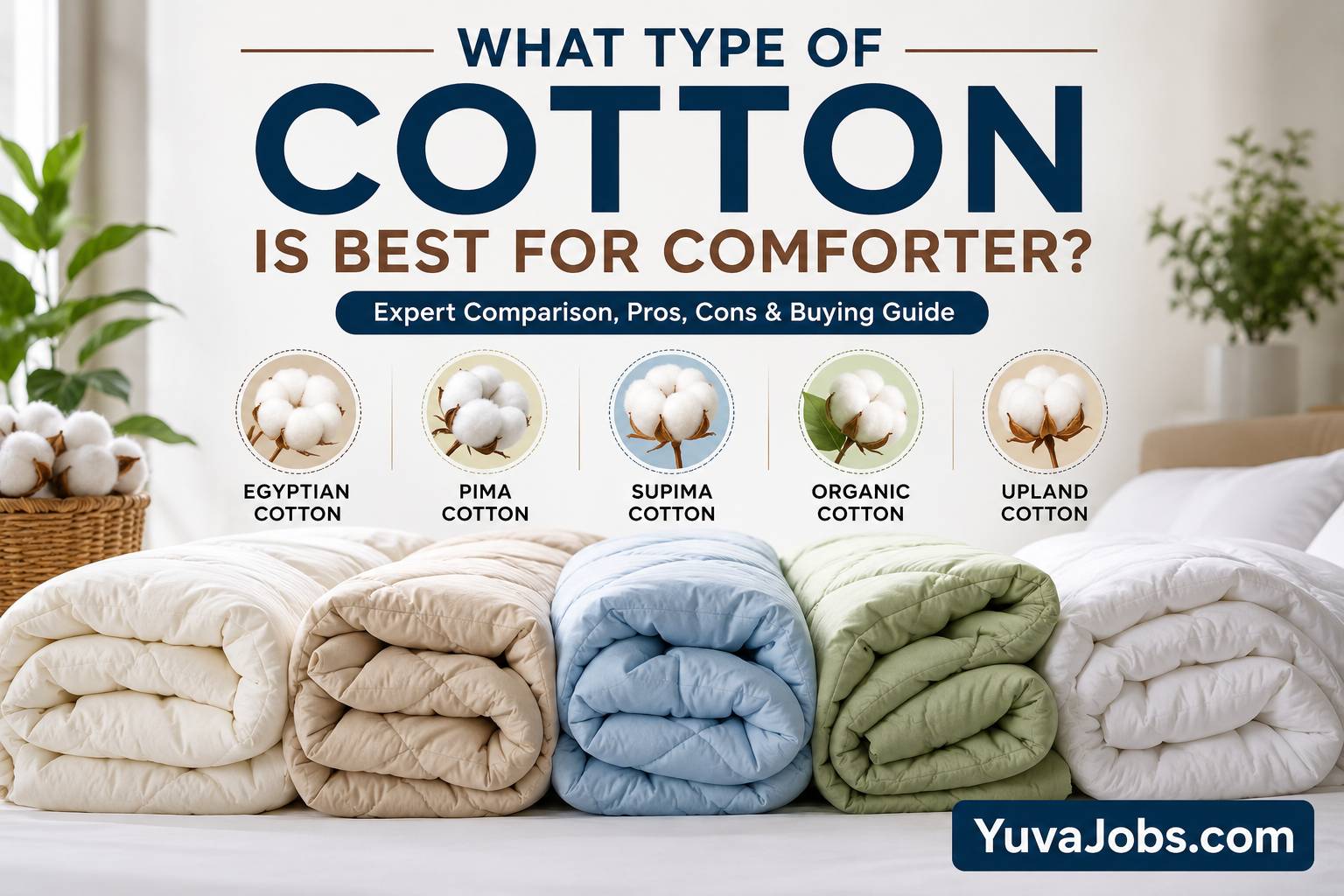
    Egyptian Cotton

    Egyptian cotton remains one of the most respected choices because of its extra-long fibers. The fabric feels exceptionally smooth, resists pilling, and usually lasts for many years with proper care. Many luxury hotels choose this material because it continues improving after repeated laundering.

    But authentic Egyptian cotton commands a premium price, and misleading labeling has become common. Buying from trusted manufacturers is essential if you’re investing in this category.

    Pima Cotton

    Pima cotton offers many of the same advantages as Egyptian cotton while generally costing less. Its long fibers create soft, breathable fabric that performs well throughout the year.

    For many households, Pima represents the sweet spot between luxury and affordability. Most sleepers would struggle to notice a major difference between high-quality Pima and genuine Egyptian cotton during everyday use.

    Supima Cotton

    Supima is certified American-grown Pima cotton produced under strict quality standards. Certification gives buyers confidence that they’re getting genuine premium cotton rather than clever marketing language.

    The downside is simple: fewer comforters use certified Supima, so choices can be more limited and prices tend to remain higher.

    Organic Cotton

    Organic cotton appeals to shoppers who prioritize environmentally responsible farming methods. It reduces exposure to many synthetic pesticides and often appeals to households with sustainability goals.

    But organic certification doesn’t automatically mean softer fabric. Fiber length still determines much of the comfort, so organic short-staple cotton may not feel as luxurious as premium long-staple alternatives.

    Upland Cotton

    Most cotton comforters sold worldwide use Upland cotton. It remains affordable, widely available, and perfectly suitable for everyday bedding when manufactured well.

    The tradeoff is durability. Lower-grade Upland cotton tends to pill sooner and may lose softness faster than premium long-staple varieties.

    Side-by-Side Comparison

    Who Should Pick What

    If you sleep hot throughout the year, choose Pima or Supima cotton with a percale weave because they offer excellent airflow while staying soft after frequent washing.

    But if you’re furnishing a guest room or shopping on a limited budget, a well-made Upland cotton comforter delivers solid everyday performance without the premium price tag.

    If sustainability matters most, organic cotton makes sense because its farming practices reduce environmental impact. Just remember that softness depends on fiber quality as much as certification.

    Or, if you simply want bedding that can last for many years with minimal pilling, Egyptian cotton remains an excellent investment despite the higher initial cost.

    The truth is that most people don’t need the most expensive cotton available. A quality Pima cotton comforter often delivers nearly the same sleeping experience while costing noticeably less.

    Final Thoughts

    The answer to what type of cotton is best for comforter depends on your priorities rather than one universal winner. Pima cotton offers the strongest combination of comfort, durability, and value for most households. Egyptian and Supima cotton are outstanding premium choices if authenticity is verified, while organic cotton suits environmentally conscious shoppers. Upland cotton remains a sensible budget option when sourced from reputable manufacturers. Compare fiber quality before thread count, read product details carefully, and choose the comforter that matches how you actually sleep instead of relying solely on luxury labels.

  • Best sd cards for canon r6 20 fps

    Best sd cards for canon r6 20 fps

    Fast cameras have a way of exposing slow accessories. The Canon EOS R6 can shoot at up to 20 frames per second using its electronic shutter, and that speed quickly reveals whether your SD card is keeping up or quietly becoming the bottleneck.

    Buying the most expensive memory card isn’t always the smartest answer. Some photographers spend extra for performance they’ll never notice, while others save a little upfront only to discover long buffer waits during wildlife sessions or wedding ceremonies. The balance between write speed, reliability, capacity, and price matters more than the number printed on the package.

    This guide compares the best SD cards for Canon R6 20 fps based on real-world shooting rather than marketing claims. By the end, you’ll understand which cards genuinely benefit high-speed burst photography, where spending more actually helps, and where you can confidently save money without sacrificing performance.


    What actually matters when choosing

    The specification sheet only tells part of the story.

    The Canon EOS R6 uses dual UHS-II SD card slots, and while many buyers immediately chase the highest advertised read speeds, sustained write performance has a much bigger impact on continuous shooting. Burst photography generates hundreds of large RAW files in a short time, and the camera’s internal buffer eventually depends on how quickly the card accepts that data.

    And that’s where video speed classes become surprisingly useful. A V90 card guarantees at least 90 MB/s sustained writes, while a V60 guarantees 60 MB/s. That minimum sustained speed is often more meaningful than a package claiming “300 MB/s” because those peak numbers usually refer to ideal laboratory conditions.

    Capacity deserves more thought than many photographers give it. A 64GB card may seem sufficient until you spend a day photographing birds, motorsports, or weddings in RAW. Suddenly, swapping cards interrupts the workflow far more than waiting an extra second for the buffer to clear.

    Reliability also matters—perhaps more than outright speed. Established manufacturers generally provide better quality control, stronger error correction, and longer warranties (although no memory card is immune to failure). Realistically, every SD card can eventually fail, which is why using both card slots for backup remains one of the smartest habits R6 owners can develop.

    But here’s the thing: unless you’re constantly shooting long RAW bursts, you may never notice the difference between premium V90 cards and good-quality V60 alternatives.


    The options, covered honestly

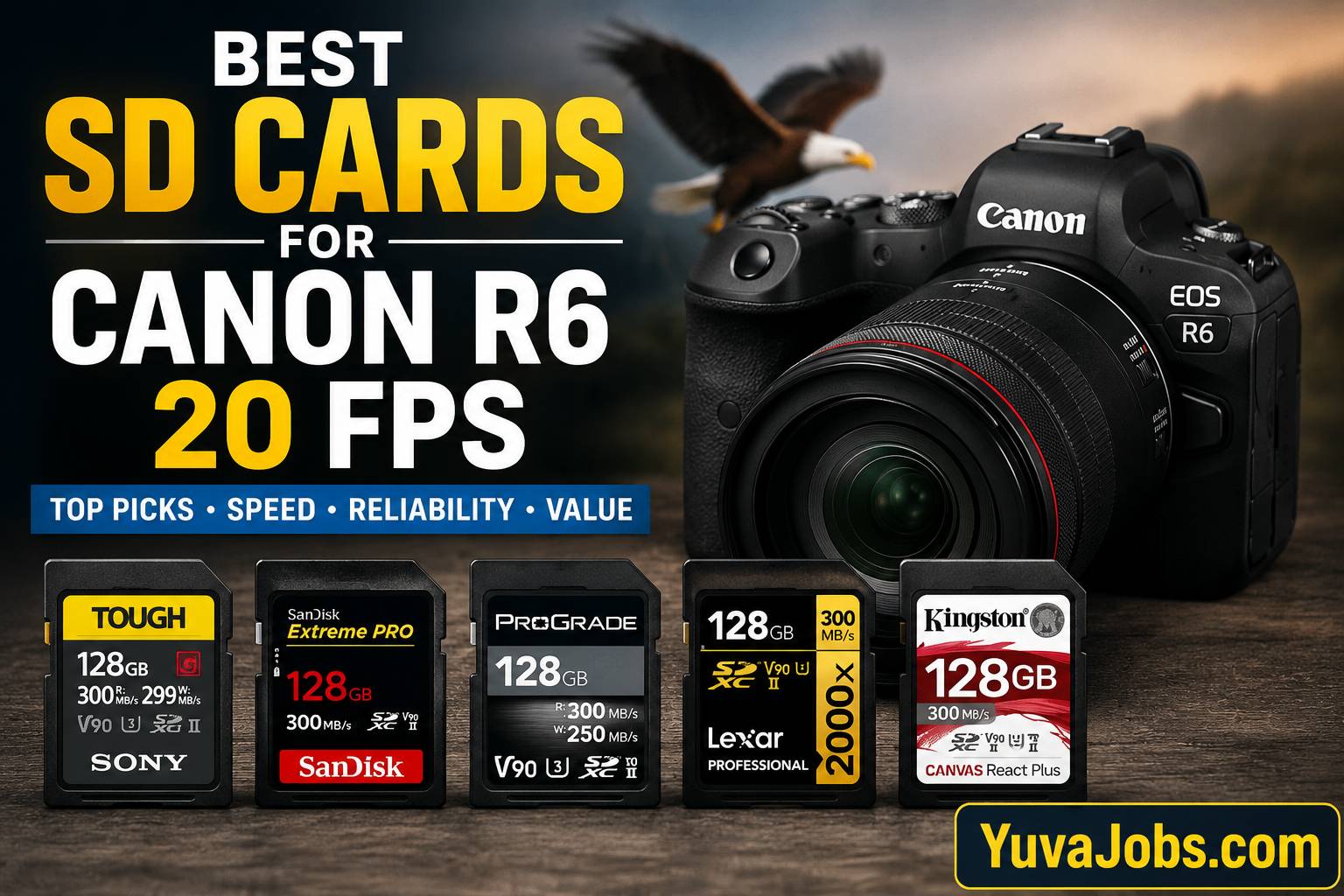
    1. Sony SF-G Tough Series V90

    For photographers who regularly push the Canon R6 to its limits, the Sony SF-G Tough Series remains one of the strongest choices available.

    Its biggest strength isn’t just speed. The one-piece molded construction removes fragile ribs and the write-protect switch, making the card physically tougher than conventional SD cards. Wildlife photographers working in rain, dust, or cold environments often appreciate this extra durability.

    Performance during long RAW bursts is consistently excellent, and buffer clearing remains among the fastest available for UHS-II media.

    The downside is obvious: price. Many casual users simply won’t benefit enough to justify the premium.


    2. SanDisk Extreme PRO UHS-II V90

    SanDisk has earned its reputation through years of dependable professional media, and the Extreme PRO V90 continues that tradition.

    Write speeds stay consistently high during demanding workloads, making it well suited for sports photography, action sequences, and 4K or 6K video recording. Availability is another advantage because replacements are easy to find worldwide.

    The weakness isn’t performance but value. Depending on current pricing, it sometimes costs nearly as much as faster competitors while offering little practical advantage.

    Still, for photographers who already trust SanDisk, it’s a safe investment.


    3. ProGrade Digital SDXC UHS-II V90

    ProGrade Digital has quietly become a favorite among many professional photographers.

    Instead of flashy marketing, the company focuses on consistency, firmware quality, and dependable sustained performance. Long continuous bursts feel smooth, and the cards maintain strong write speeds even after filling a significant portion of their capacity.

    And customer support tends to receive positive feedback from professionals who rely on memory cards daily.

    Availability can be more limited outside North America, and prices fluctuate more than larger brands.


    4. Lexar Professional 2000x UHS-II V90

    Lexar’s Professional 2000x series offers one of the better balances between speed and affordability.

    Buffer performance with the Canon R6 is excellent for continuous RAW shooting, while read speeds make importing thousands of photos noticeably faster. Many enthusiasts find this card delivers nearly flagship performance without flagship pricing.

    Quality control improved after Lexar’s ownership changes, although older reviews sometimes reflect experiences with earlier production.

    For many buyers, this represents one of the strongest value choices.


    5. Kingston Canvas React Plus V90

    Kingston often receives less attention than Sony or SanDisk, yet its Canvas React Plus deserves serious consideration.

    Sustained write performance is competitive with other premium V90 cards, making it suitable for demanding photography and high-bitrate video recording. The included UHS-II card reader in many retail packages also adds useful value.

    The only real drawback is brand perception. Some buyers simply overlook Kingston when shopping for camera gear despite the card performing very well.

    So if pricing is favorable, it’s an easy recommendation.


    6. Delkin Devices Power V90

    Delkin focuses heavily on professional imaging equipment rather than consumer electronics.

    Its Power V90 series performs reliably during extended burst sessions and comes with an attractive warranty program. Photographers shooting commercial assignments often appreciate Delkin’s emphasis on long-term reliability.

    The tradeoff is that availability varies considerably depending on your region.


    Side-by-side comparison


    Who should pick what

    Someone photographing weddings will usually benefit most from the SanDisk Extreme PRO because dependable performance and broad worldwide availability reduce stress when replacing equipment during busy seasons.

    Wildlife photographers spending hours tracking birds or fast-moving animals should lean toward the Sony SF-G Tough. Its physical durability becomes meaningful after months of outdoor use, and fast buffer clearing helps during unpredictable action.

    If you’re an enthusiast who shoots travel, family events, occasional sports, and portraits, the Lexar Professional 2000x delivers outstanding value. You’ll enjoy nearly flagship performance while leaving room in the budget for an extra battery or another lens.

    But photographers who frequently fill both SD slots with simultaneous backups may find Kingston Canvas React Plus or ProGrade Digital V90 particularly attractive because they combine dependable sustained performance with competitive pricing.

    One caveat deserves mentioning: firmware updates, manufacturing revisions, and pricing change over time, so today’s best-value card isn’t guaranteed to remain tomorrow’s bargain.


    The Canon EOS R6 is capable of remarkable speed, but only when the storage behind it can keep pace. For most serious photographers, a quality V90 UHS-II card offers the best long-term experience, especially during long RAW bursts and demanding video work. If value matters most, the Lexar Professional 2000x and Kingston Canvas React Plus are difficult to overlook. Spend according to how you actually shoot, enable dual-card recording whenever possible, and choose capacity with tomorrow’s photo sessions—not just today’s—in mind

  • One stage snow blower vs two stage

    One stage snow blower vs two stage

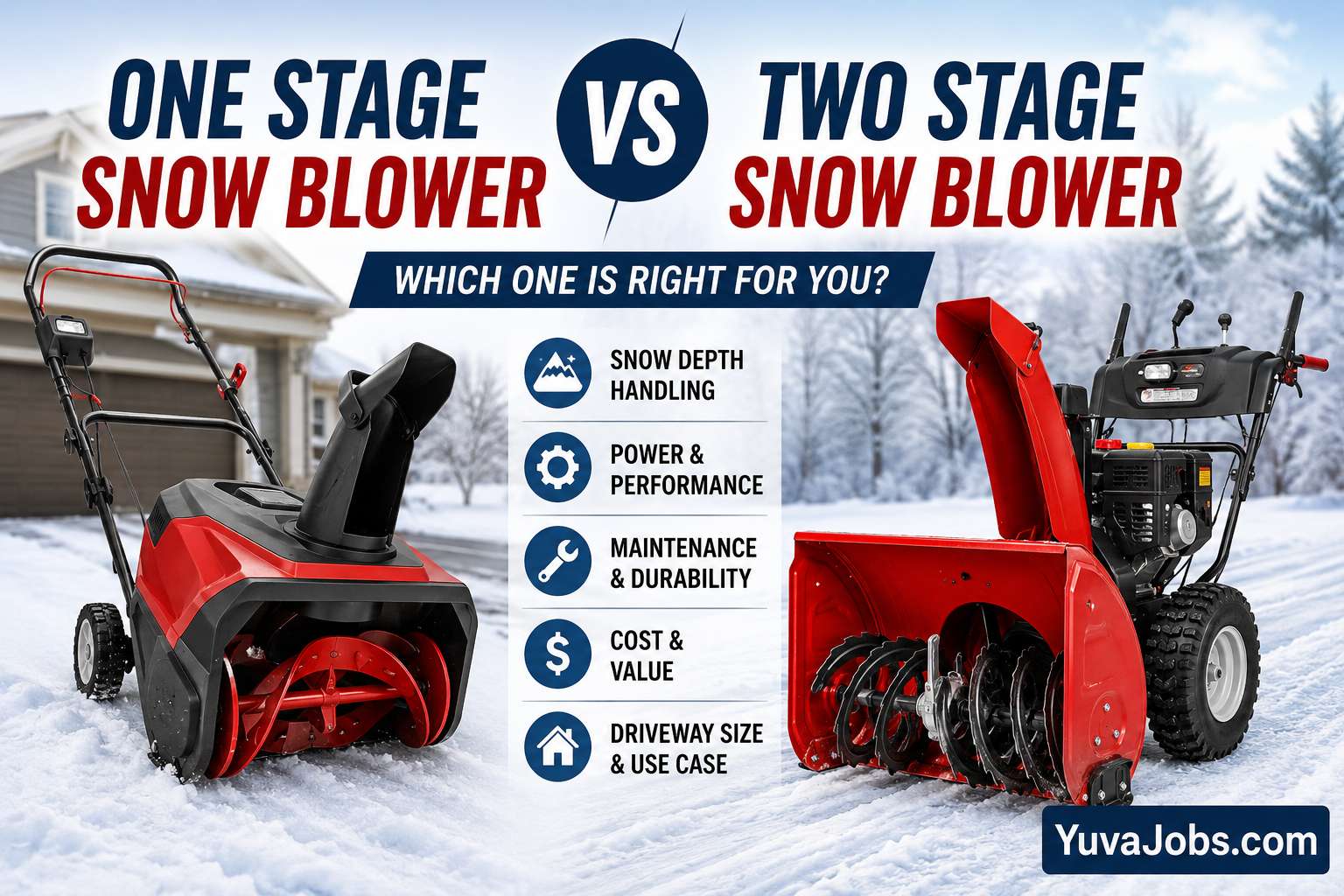
    Snow removal is one of those jobs where buying the wrong machine becomes obvious after the first major storm. A blower that handles two inches of powder with ease may struggle when heavy, wet snow piles up at the end of the driveway. That’s why the choice between a one stage snow blower vs two stage model deserves more thought than simply comparing prices. By the end of this guide, you’ll understand how each type performs in real conditions, where each one falls short, and which option makes the most sense for your property and winter weather.

    What Actually Matters When Choosing

    Horsepower and clearing width catch attention, but daily usability often matters more. A machine that is easy to start, steer, and store may see more use than a larger model that feels difficult to maneuver.

    But snow type should be your first consideration—not the size of your driveway alone. Dry powder behaves very differently from heavy, slushy snow. A one-stage machine can clear light snowfall quickly, while a two-stage unit keeps working when snow becomes dense or icy (especially after a snowplow leaves packed snow at the curb).

    And think about your storage space. Two-stage blowers are significantly larger and heavier. Moving one around a crowded garage or shed can become frustrating over time.

    Here’s the thing: the truth is that many homeowners buy more machine than they actually need. If your area rarely receives more than 6 inches of snow in a single storm, paying for extra capacity may not provide much real benefit. Weather patterns also change from year to year, so no recommendation fits every winter perfectly.

    The Options, Covered Honestly

    A one-stage snow blower uses a fast-spinning rubber auger that both collects and throws snow in a single motion. Because the auger touches the ground, it cleans paved surfaces well and often leaves less snow behind. These models are lighter, easier to turn, and require less storage space. They are ideal for sidewalks, short driveways, and regions with light to moderate snowfall. Their biggest weakness appears when snow becomes deep, wet, or packed, where performance drops noticeably.

    A two-stage snow blower separates the work between a metal auger and an impeller. The auger breaks up snow while the impeller throws it farther through the chute. So these machines clear deeper snow faster and handle icy piles with much less effort. Larger tires and self-propelled drive systems reduce operator fatigue, although the machine itself is heavier and costs more.

    Realistically, maintenance also differs. Two-stage machines have more moving parts, which means additional belts, shear pins, and servicing. One-stage models generally require less maintenance, making ownership simpler for occasional users.

    Comparison

    <table> <tr> <th>Feature</th> <th>One-Stage</th> <th>Two-Stage</th> </tr> <tr> <td>Best Snow Depth</td> <td>Up to 6–8 inches</td> <td>8+ inches and heavy snow</td> </tr> <tr> <td>Driveway Size</td> <td>Small to medium</td> <td>Medium to large</td> </tr> <tr> <td>Snow Type</td> <td>Light, fluffy snow</td> <td>Wet, packed, icy snow</td> </tr> <tr> <td>Weight</td> <td>Light and easy to maneuver</td> <td>Heavy but self-propelled</td> </tr> <tr> <td>Maintenance</td> <td>Lower</td> <td>Higher</td> </tr> <tr> <td>Price</td> <td>More affordable</td> <td>Higher upfront cost</td> </tr> </table>

    Who Shou

    ld Pick WhatIf you clear a short driveway, sidewalks, or receive only occasional snowfall, choose a one-stage snow blower because it is easier to handle, store, and maintain.

    If your region experiences frequent storms, heavy snowfall, or icy buildup, go with a two-stage snow blower because it delivers consistent performance without overloading the machine.

    Or consider how long you plan to stay in your current home. A homeowner expecting many winters in a snow-heavy climate may find the extra investment worthwhile, while someone facing mild winters may never fully benefit from the larger machine.

    Final Thoughts

    Choosing between a one stage snow blower vs two stage model comes down to matching the machine to your climate rather than buying the biggest option available. A one-stage blower offers convenience and value for lighter conditions, while a two-stage machine provides the strength needed for demanding winters. Compare your average snowfall, driveway size, available storage, and maintenance expectations before making a purchase. That approach usually leads to fewer regrets when the next storm arrives.

  • Ms access change subform form under datasheet record mode

    Ms access change subform form under datasheet record mode

    Changing a subform in Microsoft Access sounds like a small design choice until your database starts growing. Then it becomes one of those decisions that quietly affects data entry speed, user mistakes, maintenance, and even future upgrades. Many developers begin with a datasheet subform because it is quick to build, only to realize later that a different form view would better match the workflow. Others wonder whether switching forms dynamically is the better long-term solution.

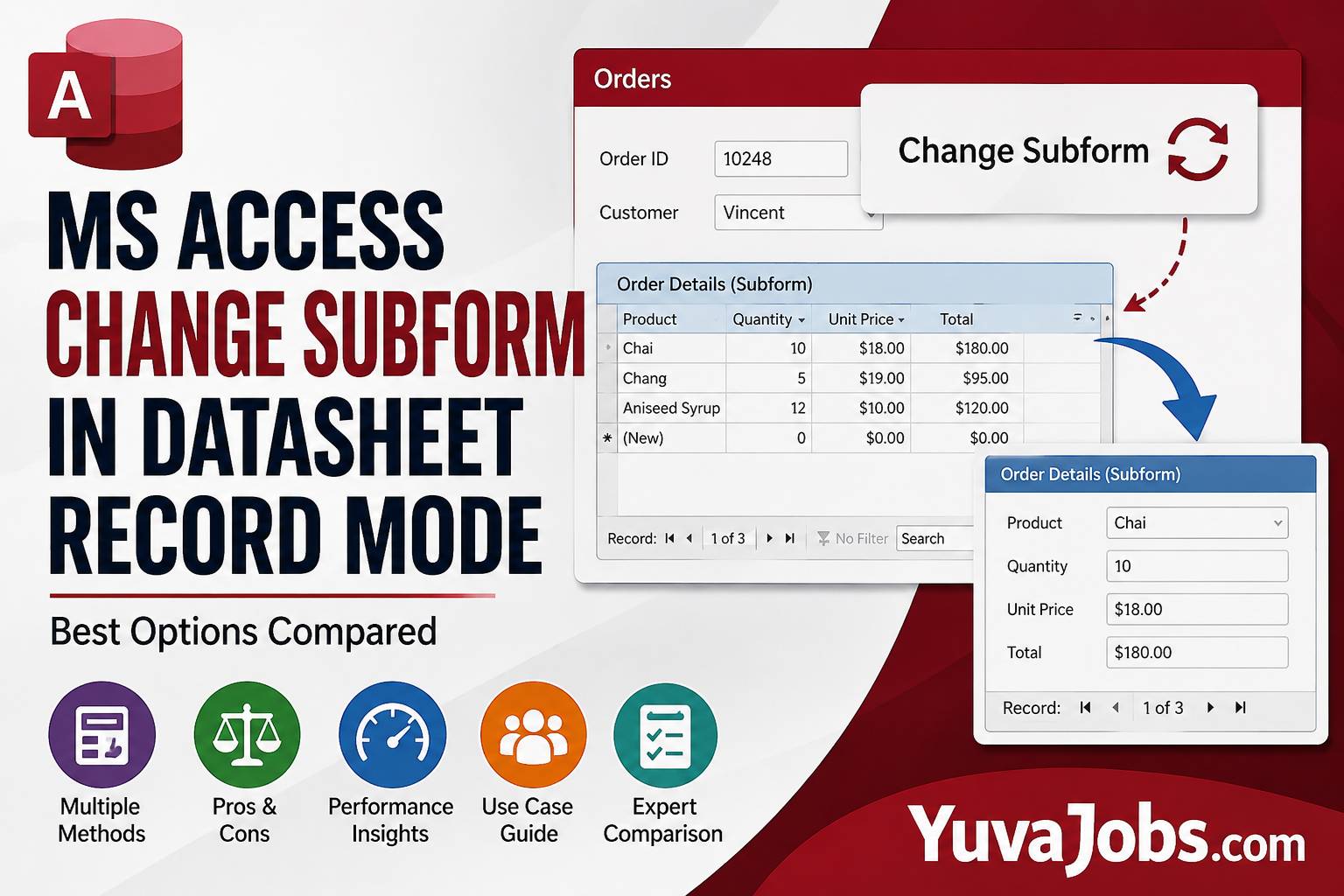
    This comparison looks beyond the obvious settings and explores the practical ways to change a subform form under datasheet record mode. You’ll learn when simply changing the source object is enough, when multiple subforms make more sense, and when custom code is justified. By the end, you’ll have a realistic understanding of each approach, including its strengths, limitations, and the situations where it performs best.

    What Actually Matters When Choosing

    The biggest mistake isn’t selecting the wrong form view. It’s designing the subform around today’s requirement instead of tomorrow’s maintenance.

    Datasheet view works exceptionally well for rapid editing because users already understand spreadsheet-like interfaces. But once conditional formatting, calculated controls, command buttons, or validation logic become part of the design, datasheets begin to show their limits. The friction appears gradually—and usually after users have become dependent on the existing layout.

    Another overlooked factor is whether records remain editable after changing the form. Different Recordset Types, Allow Edits settings, linked master/child fields, and filter conditions can affect editing behavior without producing obvious errors (which makes troubleshooting frustrating).

    And performance deserves more attention than it usually receives. Loading a complicated continuous form with dozens of calculated controls may slow navigation, while a simple datasheet loads almost instantly. If the parent form refreshes frequently, that difference becomes noticeable during everyday work.

    Here’s the thing: developers often focus on appearance first, yet maintainability is usually the better deciding factor. A solution requiring only a property change today may save hours of debugging months later.

    One more consideration is user familiarity. Experienced Access users often prefer datasheets for bulk editing, while occasional users generally perform better with structured continuous forms that clearly label each field. That tradeoff rarely appears in documentation, but it becomes obvious after watching real people use the application.

    The Options, Covered Honestly

    Option 1: Replace the Subform Source Object

    This is usually the simplest approach. Instead of modifying the existing datasheet, change the Subform Control’s Source Object so it loads another form.

    For example, the parent form may initially display a datasheet. A command button or combo box then changes the Source Object property to another form designed in Continuous Forms or Single Form view.

    The advantages are clear. Each form remains independent, maintenance is straightforward, and different layouts can reuse the same underlying table or query.

    The downside is that each form loads separately. If several forms require identical calculations or formatting, keeping them synchronized requires extra work. Small changes sometimes have to be repeated across multiple forms.

    This option works best for databases where users switch between overview and detailed editing.

    Option 2: Convert the Datasheet into a Continuous Form

    Many developers eventually discover that Continuous Forms offer nearly all the benefits of datasheets while allowing much greater customization.

    Labels remain visible.

    Buttons become available.

    Conditional formatting expands significantly.

    Calculated controls are easier to manage.

    And users can still scroll through multiple records efficiently.

    The main drawback is development time. Recreating a polished datasheet layout inside a continuous form often takes longer than expected. Column sizing, alignment, alternating colors, and navigation all require manual attention.

    Realistically, though, many mature Access applications eventually move toward Continuous Forms because they provide greater flexibility without completely changing the user experience.

    Option 3: Dynamically Switch Forms with VBA

    Sometimes different users need different layouts.

    Instead of forcing everyone into the same interface, VBA can switch subforms depending on user selections, security roles, departments, or record types.

    For example:

    • Sales staff see editable datasheets.
    • Managers view summarized information.
    • Administrators receive maintenance screens.

    This creates a highly adaptable application.

    But complexity increases quickly. Every additional form introduces testing requirements, event handling, and synchronization issues. Developers also need to ensure bookmarks, filters, and current records remain consistent after switching.

    This method shines in enterprise databases but may be excessive for smaller projects.

    Option 4: Keep the Datasheet and Enhance It

    Sometimes changing the form isn’t necessary at all.

    Datasheets support sorting, filtering, resizing columns, calculated fields, and conditional formatting. Small usability improvements often solve the original complaint without redesigning the interface.

    This option carries the lowest development cost.

    Its weakness is flexibility. Datasheets cannot host command buttons for every row, display rich layouts, or organize controls as freely as standard forms.

    Still, if users mainly edit rows of data, keeping the datasheet often proves to be the most stable decision.

    Option 5: Build Separate Navigation Workflows

    Instead of replacing the subform itself, some developers separate browsing from editing.

    Users browse records in a datasheet.

    Double-clicking a record opens another form dedicated to editing.

    This keeps the datasheet clean while allowing sophisticated editing features elsewhere.

    The limitation is extra navigation. Users handling hundreds of records each day may dislike repeatedly opening and closing forms.

    Yet for databases involving detailed validation or complex relationships, this approach often reduces accidental edits and simplifies maintenance.

    Side-by-Side Comparison

    Who Should Pick What

    If your priority is fast development, replacing the Source Object usually offers the best balance between flexibility and simplicity. You can maintain separate forms without rewriting the application’s architecture.

    If your database continues growing every few months, choose Continuous Forms because they provide much more room for future enhancements. Adding controls, formatting, and validation later becomes much easier.

    And if multiple departments use the same database, VBA-based switching can create tailored interfaces without duplicating entire applications. Just be prepared for additional maintenance as the project expands.

    Users focused almost entirely on entering rows of information should probably stay with datasheets. Their speed remains difficult to beat, especially for experienced Access operators.

    Or, if data quality matters more than entry speed, keeping a datasheet for browsing while opening a dedicated edit form often strikes the right balance. The truth is that this hybrid approach reduces accidental edits while preserving an efficient overview of the data.

    One honest caveat deserves mentioning: requirements often evolve after users begin working with a database. A design that feels ideal during testing may need adjustments once real-world usage exposes bottlenecks, so plan for future changes instead of assuming the first implementation will remain unchanged.

    Closing

    Changing a subform form under datasheet record mode is less about finding one perfect technique and more about matching the design to how people actually work. Datasheets remain excellent for rapid editing, while Continuous Forms and dynamic switching provide far greater flexibility when workflows become more demanding. If you’re unsure where to start, replacing the subform’s Source Object is usually the safest first step because it introduces minimal risk while leaving room to expand later. Evaluate how your users interact with the database for a few weeks, then refine the interface based on real usage rather than assumptions.

  • Honda is recalling 388 cr-v e:fcevs for potential coolant leaks

    Honda is recalling 388 cr-v e:fcevs for potential coolant leaks

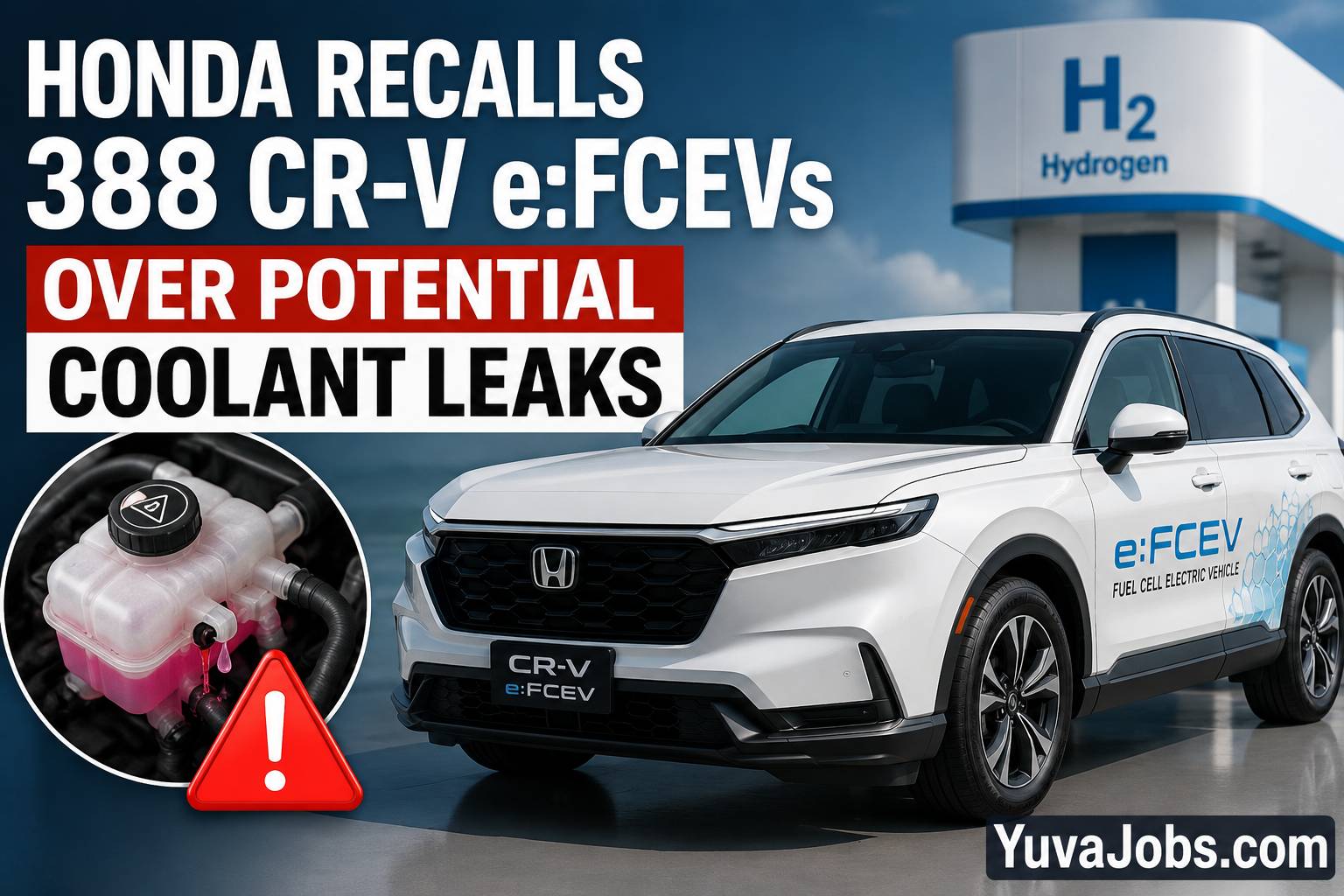
    A vehicle recall rarely affects only the owners receiving the notification. It often becomes a window into something larger: how automakers handle emerging technology, manufacturing quality, and long-term reliability. That is exactly why the news that Honda is recalling 388 CR-V e:FCEVs for potential coolant leaks deserves attention beyond the small number of vehicles involved.

    For shoppers considering fuel-cell vehicles, battery-electric vehicles, or even plug-in hybrids, recalls provide valuable clues about the real-world ownership experience. They reveal where engineering challenges still exist and how manufacturers respond when problems emerge. The Honda CR-V e:FCEV occupies a unique place in the market, combining hydrogen fuel-cell technology with plug-in charging capability, making it one of the most unusual vehicles currently available.

    By the end of this article, you’ll understand what this recall means, how serious the issue appears to be, how it compares with reliability concerns seen in competing alternative-fuel vehicles, and what current or prospective owners should realistically expect.

    Why This Recall Matters More Than the Number Suggests

    A recall involving just 388 vehicles might sound insignificant at first glance. Yet small recalls can sometimes tell us more than mass-market recalls because they often involve specialized technologies where production volumes are limited.

    The CR-V e:FCEV represents one of Honda’s most ambitious engineering projects. Unlike a conventional hybrid or battery-electric model, it combines hydrogen fuel-cell systems, high-pressure hydrogen storage, electric propulsion, and plug-in charging capabilities into a single vehicle.

    That complexity creates unique reliability considerations.

    When evaluating any alternative-fuel vehicle, the real question isn’t whether a recall happens. Almost every manufacturer experiences recalls at some point. What separates a reassuring ownership experience from a frustrating one is how isolated the issue is, how quickly it is identified, and whether it points to a broader engineering weakness.

    And that’s where this recall becomes interesting.

    A coolant leak in a fuel-cell system is not equivalent to a cosmetic defect or a software annoyance. Thermal management plays a central role in fuel-cell operation. Maintaining proper temperatures helps preserve efficiency, performance, and durability over time. A leak has the potential to affect those systems if left unaddressed.

    But context matters.

    The relatively small number of affected vehicles suggests Honda may have identified a specific manufacturing or component-related issue rather than a widespread design flaw. Owners should still take recall notices seriously, yet the available information does not automatically indicate a systemic problem with the entire CR-V e:FCEV program.

    Here’s the thing: early-production advanced vehicles often reveal minor issues that only become visible after real-world use. The important factor is whether the manufacturer responds quickly and transparently.

    The Options: How Honda’s Situation Compares with Other Alternative-Fuel Vehicle Challenges

    Choosing among alternative-fuel vehicles has never been simple. Every technology comes with strengths, compromises, and occasional reliability concerns.

    The Honda CR-V e:FCEV offers a particularly distinctive proposition. Drivers receive electric driving capability for daily commutes while retaining hydrogen fuel-cell functionality for extended range. That flexibility can reduce range anxiety in situations where charging infrastructure or hydrogen stations are limited.

    The strength of Honda’s approach lies in diversification. Owners are not entirely dependent on one energy source. And for some drivers, that hybridized approach may feel more practical than relying exclusively on battery charging.

    However, the tradeoff is complexity.

    A battery-electric vehicle such as those offered by major EV manufacturers eliminates hydrogen systems altogether. Fewer propulsion components can sometimes mean fewer potential failure points. Yet battery-electric vehicles face their own challenges, including battery degradation concerns, charging availability issues, software recalls, and thermal management problems.

    Toyota’s hydrogen fuel-cell strategy provides another comparison point. Vehicles such as the Mirai focus exclusively on hydrogen operation rather than combining hydrogen and plug-in capabilities. This simplifies some aspects of system integration while creating greater dependence on hydrogen infrastructure.

    Then there are plug-in hybrids. They remain attractive because they blend gasoline backup with electric driving capability. For many consumers, plug-in hybrids offer a lower-risk transition into electrification. But they introduce dual-system maintenance requirements and can become mechanically complex over time.

    Realistically, no technology category is immune from recalls.

    Battery-electric vehicles have experienced battery-related recalls. Plug-in hybrids have seen charging-system recalls. Hydrogen vehicles occasionally encounter issues involving fuel-cell support systems, sensors, or thermal management components.

    The truth is that advanced propulsion technologies are still evolving. Manufacturers are learning from real-world data as these vehicles accumulate miles in diverse climates and driving conditions.

    One limitation worth acknowledging is that long-term reliability data for the CR-V e:FCEV remains limited. Production numbers are relatively small compared with mainstream vehicles, making it difficult to draw broad conclusions about ownership experiences five or ten years into the future.

    That doesn’t make the vehicle risky. It simply means buyers should recognize that the available evidence base is smaller than what exists for established gasoline models.

    Side-by-Side Comparison of Alternative-Fuel Vehicle Ownership Considerations

    Vehicle Type Primary Energy Source Infrastructure Dependency System Complexity Typical Recall Areas Best For
    Honda CR-V e:FCEV Hydrogen + Plug-In Electric Hydrogen Stations and Charging Very High Fuel Cell Systems, Cooling Components, Software Early adopters wanting flexibility
    Hydrogen Fuel-Cell Vehicle Hydrogen Hydrogen Stations High Fuel Delivery, Sensors, Thermal Management Drivers with reliable hydrogen access
    Battery-Electric Vehicle Electricity Charging Network Moderate Battery Systems, Charging Hardware, Software Most urban and suburban commuters
    Plug-In Hybrid Electricity + Gasoline Charging Optional High Charging Components, Hybrid Systems Drivers seeking maximum flexibility
    Traditional Hybrid Gasoline + Electric Assist Minimal Moderate Battery Management, Electronics Reliability-focused buyers

    Who Should Pick What

    If you’re specifically interested in cutting-edge propulsion technology and have access to hydrogen infrastructure, the Honda CR-V e:FCEV remains one of the most intriguing choices available. The combination of plug-in charging and hydrogen capability offers flexibility that few competitors can match.

    If reliability history matters more than innovation, a traditional hybrid remains difficult to beat. Years of real-world data provide confidence that newer technologies simply cannot match yet.

    For drivers who have dependable home charging and rarely travel beyond charging-network coverage, battery-electric vehicles often deliver the simplest day-to-day ownership experience. Charging overnight becomes routine, and maintenance requirements can be relatively low.

    But if long road trips, uncertain charging access, or changing travel patterns are part of your lifestyle, a plug-in hybrid often strikes the most practical balance. You gain electric driving for daily use without becoming dependent on charging stations for every journey.

    Or perhaps you’re simply evaluating whether the Honda recall should affect a purchase decision. In that case, the available evidence suggests caution rather than alarm. A targeted recall addressing a specific issue is very different from a widespread reliability crisis.

    Final Thoughts

    The recall affecting 388 Honda CR-V e:FCEVs for potential coolant leaks highlights both the promise and complexity of emerging vehicle technologies. Owners should complete the recall repair promptly, but the limited scope of the issue does not automatically signal a broader problem with the vehicle.

    For prospective buyers, the decision should focus less on this individual recall and more on whether hydrogen infrastructure, plug-in charging convenience, and advanced technology align with your needs. The next step is simple: evaluate how you actually drive every week, then compare that reality against the strengths and compromises of each alternative-fuel option before making a commitment.

  • Best sandals to wear with plantar fasciitis

    Best sandals to wear with plantar fasciitis

    Honest comparisons of the best sandals to wear with plantar fasciitis, including arch support, cushioning, fit, and real-world comfort tradeoffs.

    There is a strange moment that happens with plantar fasciitis. Your running shoes feel supportive enough indoors, maybe even fine during a short walk, but the second summer arrives and you switch to sandals, the heel pain creeps back in almost immediately. A few hours later, even standing in the kitchen feels irritating.

    The problem is not just “lack of support.” Most sandals fail in smaller ways that only become obvious after a full day outside — the footbed bends too much, the heel sits flat without shock absorption, or the straps force your foot to grip while walking. And that gripping motion quietly aggravates the plantar fascia.

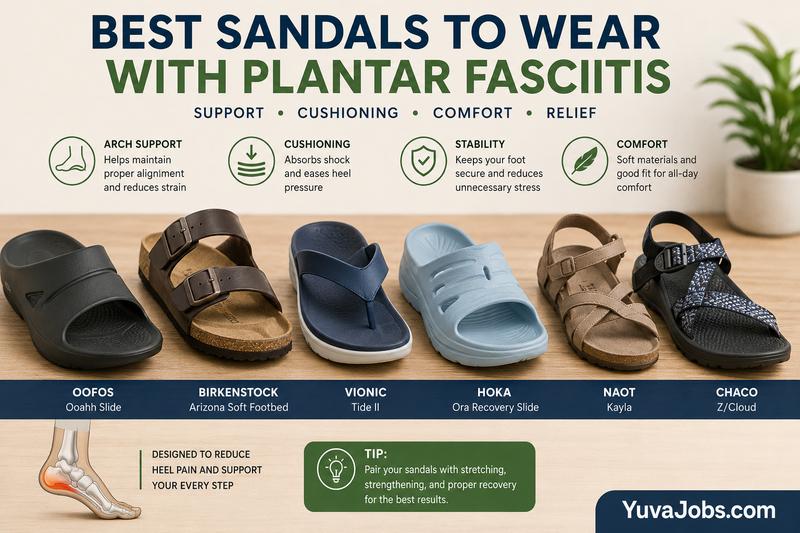
    The best sandals to wear with plantar fasciitis solve those hidden problems differently. Some focus on aggressive arch structure. Others reduce heel pressure through cushioning instead of rigid support. By the end of this guide, you will know which styles actually help, which ones only feel soft for the first hour, and which tradeoffs matter depending on how you walk, stand, or travel.

    What actually matters when choosing

    Most people shop for sandals by squeezing the footbed with their thumb. Soft equals comfortable, right? Realistically, that shortcut causes many bad purchases.

    For plantar fasciitis, the relationship between softness and comfort is more complicated. Extremely soft foam often compresses unevenly after a few weeks, especially under the heel. That can leave the plantar fascia working harder to stabilize your stride. Moderate cushioning with controlled rebound usually performs better over long days.

    Arch shape matters too, but not in the way marketing suggests. A very high arch support can feel amazing for fifteen minutes and exhausting after three hours if it does not match your foot geometry. And flat-footed walkers often tolerate gentle contouring better than aggressive orthopedic shaping.

    Another overlooked detail is torsional rigidity — how much the sandal twists through the middle. If you can wring it like a towel, it probably will not control foot fatigue well during longer walks. But if it is completely rigid, some people develop pressure hotspots near the arch. The sweet spot sits somewhere in between.

    Straps change everything as well. Thin straps force toe gripping because the foot subconsciously tries to hold the sandal in place. Wider, adjustable straps reduce that compensation pattern. (This becomes especially noticeable during airport travel or long shopping days.)

    And then there is heel drop, which few buyers think about. A completely flat sandal can increase tension on the Achilles tendon, indirectly pulling on the plantar fascia. Slight heel elevation often feels calmer during flare-ups.

    Here’s the thing: the “best” option depends heavily on whether your pain comes mostly from standing, walking long distances, recovering after exercise, or simply surviving hard flooring at home.

    The options, covered honestly

    OOFOS Ooahh and OOlala

    OOFOS became popular for a reason. The cushioning absorbs impact extremely well, especially for people whose heel pain spikes after workouts or long standing shifts. Walking in them feels unusually forgiving, almost marshmallow-like without collapsing completely.

    But there is a tradeoff. Some people love the softness immediately, while others feel unstable after longer wear because the foam allows mild side-to-side movement. They also are not ideal for uneven outdoor surfaces. If your plantar fasciitis is acute and angry, though, few sandals reduce heel shock as effectively.

    Birkenstock Arizona Soft Footbed

    Birkenstocks divide people sharply — and not because they are trendy. Their cork-latex structure creates stable support that improves over time as the footbed molds slightly to your shape. The deep heel cup helps distribute pressure more evenly than many foam sandals.

    The break-in period is real, though. For the first week or two, some wearers feel like the sandal is fighting their foot instead of supporting it. People with sensitive arches sometimes never adapt fully. But for standing all day on hard floors, they often outperform softer recovery sandals once broken in.

    Vionic Tide and Rejuvenate

    Vionic sits somewhere between medical-style support and casual wearability. Their sandals typically include pronounced arch contouring and moderate heel cushioning, which works well for people who want structured support without an orthopedic appearance.

    And the brand covers a wide range of styles, which matters more than it sounds. Many supportive sandals look bulky or overly sporty. Vionic usually avoids that problem.

    The downside is consistency. Some models feel excellent, while others run narrow or overly firm depending on the season’s design updates. Trying them on matters more here than with brands that maintain identical footbeds year after year.

    Hoka Ora Recovery Slides

    These are recovery sandals first, everyday sandals second. The oversized cushioning reduces heel impact dramatically, especially after running, gym sessions, or long walking days. The rocker-shaped sole also reduces strain during toe-off, which some plantar fasciitis sufferers notice immediately.

    But they are bulky. And not everyone likes the unstable sensation created by thick foam platforms. For quick errands, travel recovery, or indoor wear, they are excellent. For all-day city walking, opinions become mixed.

    Naot Sandals

    Naot rarely gets mentioned in mainstream comparison lists, which is unfortunate because their cork-latex footbeds often strike one of the best balances between cushioning and support. They tend to feel less aggressive than Birkenstocks while still providing meaningful structure.

    Their biggest strength may actually be fit security. Many models use multiple adjustable straps that reduce foot gripping during walking.

    But pricing can be difficult to justify. Some pairs approach premium sneaker territory, and style availability changes frequently. Still, for people who want supportive sandals that do not scream “recovery footwear,” Naot deserves serious attention.

    Chaco Z/Cloud

    Chacos work well for a very specific person: someone who needs plantar fasciitis support during active outdoor movement. Hiking towns are full of them for a reason.

    The structured footbed and durable outsole provide excellent stability on uneven terrain. The Z/Cloud versions soften the experience slightly compared to traditional Chacos, which some users found too hard.

    But the truth is, they are not universally comfortable. The strap system takes patience to adjust correctly, and some wearers never enjoy the firm underfoot feel. They excel during movement more than lounging.

    Side-by-side comparison

    Sandal Best For Support Feel Cushioning Level Main Drawback Ideal Use
    OOFOS Ooahh Acute heel pain relief Gentle Very soft Can feel unstable outdoors Recovery, indoor wear, standing
    Birkenstock Arizona Soft Footbed Long standing hours Firm and structured Moderate Long break-in period Daily wear, hard floors
    Vionic Tide Balanced everyday support Pronounced arch support Moderate Fit varies between models Casual everyday use
    Hoka Ora Recovery Post-workout recovery Moderate Very high Bulky design Travel, recovery days
    Naot Sandals Support without sporty styling Balanced Moderate-soft Higher price All-day casual wear
    Chaco Z/Cloud Outdoor walking and trails Firm stability Moderate Strap adjustment learning curve Active outdoor use

    Who should pick what

    If your plantar fasciitis hurts most first thing in the morning or after exercise, go with OOFOS or Hoka Ora. Both reduce heel shock extremely well, though OOFOS feels softer while Hoka provides more forward rolling motion.

    For people standing all day at work — teachers, retail workers, salon professionals — Birkenstock or Naot usually hold up better over six or eight continuous hours. Their structure prevents the slow foot fatigue that softer sandals sometimes allow.

    But if you dislike rigid support and want something visually easier to pair with normal summer clothes, Vionic often lands in the middle comfortably.

    Or maybe your lifestyle involves walking cities, parks, and uneven terrain rather than smooth indoor floors. In that case, Chaco becomes more appealing because stability matters more than plushness outdoors.

    And if you are buying only one pair, focus less on “maximum support” and more on the type of discomfort you actually experience. Heel pain during standing behaves differently from arch fatigue during walking.

    One honest caveat: no sandal fixes severe plantar fasciitis by itself. Footwear can reduce irritation dramatically, but tight calves, sudden activity increases, or worn-out shoes elsewhere in your rotation can still keep symptoms active.

    Closing

    The best sandals to wear with plantar fasciitis are usually the ones that make your feet feel quieter after several hours, not just comfortable during the first ten minutes. That distinction matters more than branding or popularity.

    For most people, Birkenstock and Naot win on long-term stability, while OOFOS and Hoka feel better during active flare-ups. Vionic lands in the middle as an everyday compromise that many people stick with for years.

    So start by identifying your real trigger: standing, walking, recovery, or uneven terrain. Once you know that, the right sandal choice becomes much clearer — and far less frustrating.

  • List of Top Government Job Exams in India Compared

    List of Top Government Job Exams in India Compared

    Most career decisions are framed as ambition. This one is usually framed as stability. Somewhere between family expectations, job security, and long-term growth, candidates start comparing the top exams for government jobs in India — often without a clear sense of what each path actually feels like.

    The reality is less romantic. Each exam comes with its own rhythm: preparation cycles, competition intensity, posting uncertainty, and lifestyle tradeoffs. Some demand years of persistence. Others reward speed and precision. And a few quietly depend more on strategy than raw effort.

    By the end of this guide, you’ll not just know the major exams, but understand which one fits your strengths, tolerance for risk, and long-term expectations. That clarity matters more than any syllabus.

    What actually matters when choosing

    Difficulty is the obvious filter. But it’s rarely the deciding one.

    What tends to separate a good decision from regret is alignment — between your preparation style and the exam’s structure. For example, some exams reward conceptual depth over time (think long-answer papers and interviews), while others are speed-driven, where accuracy under pressure defines outcomes. Choosing the wrong format for your strengths quietly drains years.

    And then there’s unpredictability — not just in results, but in postings and career progression. A role might look prestigious on paper but involve frequent transfers or administrative constraints (which many don’t anticipate early on). That tradeoff becomes real only after selection.

    Another overlooked factor is attempt cycles. Some exams allow multiple attempts with predictable schedules. Others are irregular or highly competitive with low vacancy counts. This changes how you plan your preparation timeline.

    So the decision isn’t just about clearing an exam. It’s about sustaining the process long enough to succeed — and still wanting the job afterward.

    The options, covered honestly

    The Union Public Service Commission Civil Services Examination (UPSC CSE) sits at the top of most lists. And for good reason. It offers roles like IAS, IPS, and IFS, combining authority with wide impact. But the preparation is long and mentally demanding — often stretching across years. Success rates are extremely low, and the syllabus is vast. This suits candidates who can handle uncertainty and maintain consistency over long periods.

    Staff Selection Commission Combined Graduate Level (SSC CGL) feels very different. The structure is more predictable, and the preparation is focused on quantitative aptitude, reasoning, and general awareness. The competition is still intense, but the time-to-result cycle is shorter. The tradeoff? Roles are typically clerical or administrative rather than policy-making.

    Banking exams like IBPS PO and SBI PO introduce another dynamic — speed. These exams reward quick decision-making under time pressure. The work environment post-selection is target-driven and performance-oriented. Some thrive in that structure. Others find it stressful over time.

    Railway Recruitment Board (RRB) exams are often underestimated. They offer stable roles with decent benefits, but vacancies and patterns can change frequently (and that uncertainty can disrupt preparation strategies). The competition is large due to accessibility.

    Then there are State Public Service Commission exams. These mirror UPSC in structure but are state-specific. The advantage is localized competition and postings closer to home. The downside is variability — syllabi, timelines, and evaluation standards differ significantly between states.

    The truth is, no exam is universally “better.” Each one optimizes for a different mix of effort, reward, and lifestyle.

    Side-by-side comparison

    Exam Difficulty Level Preparation Time Job Nature Work Pressure Career Growth
    UPSC CSE Very High 1-3 years Administrative/Policy Moderate to High Very High
    SSC CGL Moderate 6-12 months Clerical/Admin Low to Moderate Stable
    Bank PO Moderate to High 6-12 months Banking/Finance High Good
    RRB Exams Moderate 6-12 months Technical/Admin Low Stable
    State PSC High 1-2 years State Administration Moderate High

    Who should pick what

    If you are comfortable with long-term uncertainty and can study consistently for years, UPSC CSE is a logical choice because it rewards depth and resilience more than speed.

    But if you prefer structured preparation with faster results, SSC CGL is more suitable — especially for those balancing other responsibilities alongside study.

    And if you perform well under time pressure and don’t mind a performance-driven work environment, banking exams like IBPS PO or SBI PO make sense.

    Or, if staying closer to your home state matters and you’re willing to adapt to less predictable timelines, State PSC exams offer a strong balance of authority and familiarity.

    RRB exams work best for candidates looking for stability with relatively lower stress, even if growth is slower.

    Closing

    Choosing between the top exams for government jobs in India is less about ranking them and more about understanding yourself. The syllabus can be learned. The pattern can be practiced. But mismatched expectations are harder to fix later.

    Pick one exam. Commit to it for a defined period. Track progress honestly. If needed, adjust early rather than after years of effort. That one decision — made carefully — often matters more than anything else in this journey.

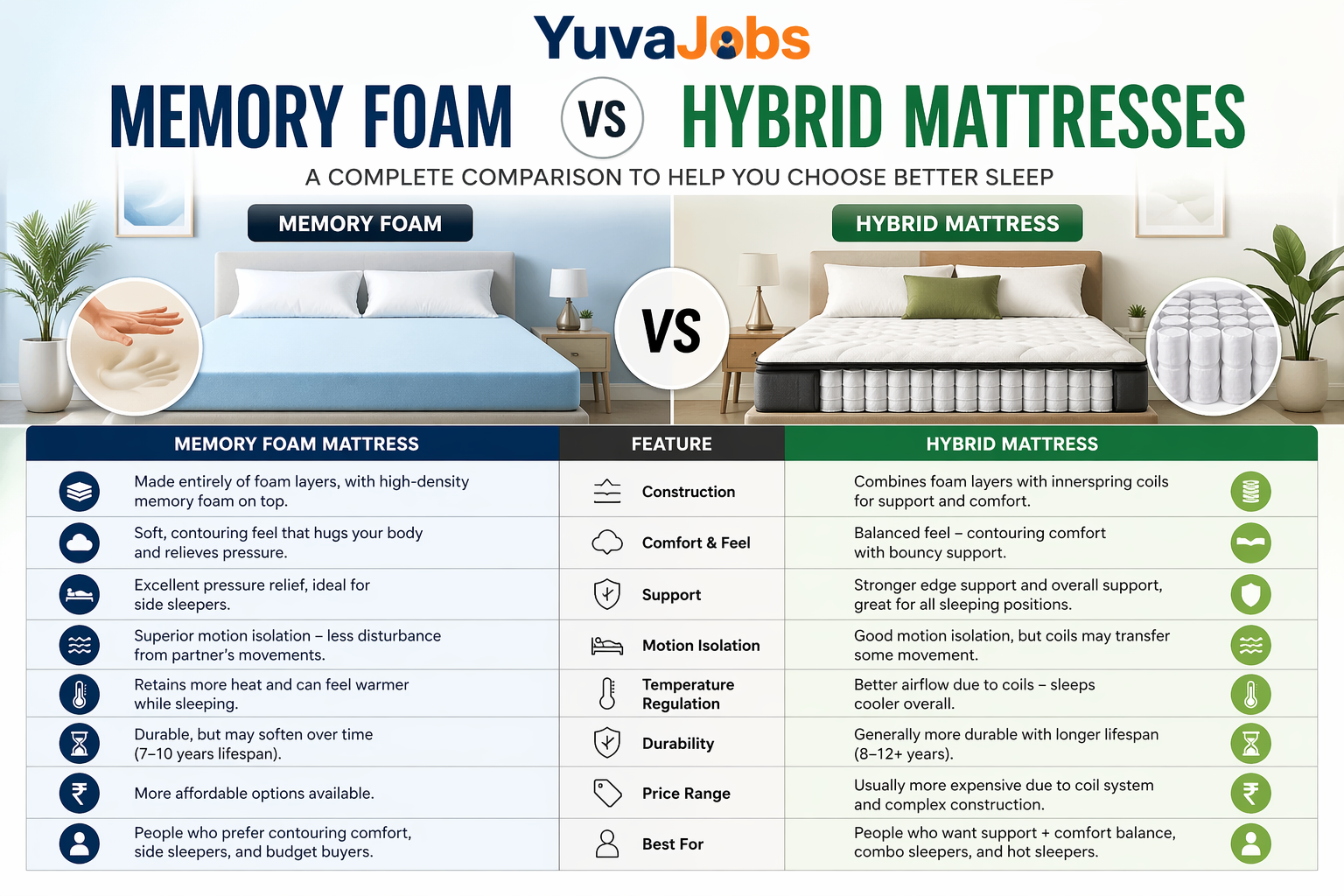
  • Make a table comparing memory foam vs hybrid mattresses

    Make a table comparing memory foam vs hybrid mattresses

    I still remember the first time I switched mattresses. It wasn’t some grand upgrade — just a desperate attempt to stop waking up with a stiff back and a weird numb arm. And honestly, that’s where most people start. You’re not shopping for luxury… you’re just trying to sleep properly.

    Somewhere along the way, you’ve probably come across the debate: memory foam vs hybrid. And yeah, it can get confusing fast. Sales pages throw big promises around, but rarely explain how it actually feels night after night. That’s exactly why I’m putting together this table comparing memory foam vs hybrid mattresses — not just specs, but real-world differences that actually matter.

    Because the truth is, what looks great on paper doesn’t always feel great at 2 AM.

    Understanding What You’re Really Sleeping On

    Let’s slow this down a bit. A memory foam mattress is basically layers of dense foam designed to contour around your body. When you lie down, it kind of hugs you — some people love that feeling. Others… not so much.

    Hybrid mattresses, on the other hand, combine foam layers with pocket springs. Think of it like mixing softness with structure. You get that cushioning on top, but there’s bounce underneath. In my experience, this changes everything — especially when you move around a lot in your sleep.

    And here’s the thing most people don’t realize: neither option is “better” universally. It depends on how you sleep, your body weight, and even how warm your room gets at night.

    How They Feel Night After Night

    Memory foam feels slow. That’s the best way I can describe it. You sink in gradually, almost like the mattress is shaping itself around you. It’s great if you want pressure relief, especially around shoulders and hips.

    But — and this is where some people get frustrated — it can feel a bit restrictive. Ever tried turning over and felt like the mattress is holding you in place? Yeah, that.

    Hybrid mattresses feel more responsive. You lie down, and instead of sinking deeply, you get a bit of pushback. Not in a bad way — just enough to make movement easier. If you toss and turn or share a bed, this difference becomes very noticeable.

    So ask yourself this: do you want to sink in, or stay more on top of the mattress?

    Memory Foam vs Hybrid — Side-by-Side Comparison Table

    Alright, let’s make things clearer. Here’s a straightforward comparison based on what actually matters in daily use.

    Feature Memory Foam Mattress Hybrid Mattress
    Feel Deep contouring, body-hugging Balanced comfort with slight bounce
    Support Even support, may feel too soft for some Stronger support from coils
    Motion Isolation Excellent — barely feel movement Good, but slight motion transfer possible
    Temperature Can retain heat Better airflow, cooler sleep
    Durability Moderate lifespan Generally longer-lasting
    Edge Support Weaker edges Stronger edges due to coils
    Best For Side sleepers, pressure relief Back sleepers, combination sleepers
    Price Range Usually more affordable Slightly higher cost

    Now, tables are helpful — but they don’t tell the full story. Let’s talk real-life usage.

    What Actually Matters in Real Life

    I’ve seen people buy memory foam thinking it’ll fix all their sleep issues… only to complain about heat within a week. If you tend to sleep warm, this matters more than you think.

    Hybrid mattresses usually solve that problem better. The coil layer allows air to move through, which keeps things cooler. It’s not ice-cold or anything, but definitely less stuffy.

    Another thing — getting in and out of bed. Sounds small, right? But weaker edges on memory foam can make it feel like you’re sliding off slightly. Hybrids feel more stable when you sit or stand up.

    And if you share your bed? Motion isolation becomes a big deal. Memory foam wins here. Your partner can move, and you might not even notice. With hybrids, you’ll feel a bit more movement — not dramatic, but noticeable if you’re a light sleeper.

    Common Mistakes People Make While Choosing

    One mistake I see all the time — people choosing based only on price. Cheaper doesn’t always mean better value, especially if you end up replacing it sooner.

    Another big one? Ignoring sleeping position. Side sleepers usually love memory foam because of pressure relief. But back or stomach sleepers often complain it feels too soft.

    And then there’s expectations. Some people expect memory foam to feel like a cloud… but it’s actually more dense and slow-moving. If you’re not prepared for that, it can feel odd at first.

    Also — and this one’s underrated — people don’t think about weight. Heavier individuals often get better support from hybrid mattresses because of the coil system underneath.

    So, Which One Should You Actually Pick?

    If I had to simplify it… memory foam is for comfort lovers who don’t move much at night. It’s quiet, soft, and great for pressure relief.

    Hybrid mattresses are more balanced. They work well for mixed sleepers, couples, and anyone who doesn’t like that “stuck” feeling.

    But honestly — there’s no perfect choice for everyone. It comes down to how you sleep, what annoys you, and what you value more: softness or support.

    If you’re still unsure, try this approach: think about your current mattress. What do you dislike most? That answer usually points you in the right direction.

    And if you’re about to invest in a new mattress, don’t rush it. Sleep is one of those things where small differences feel huge over time.

    Take your time, compare properly, and choose something your future self won’t complain about at 3 AM.